
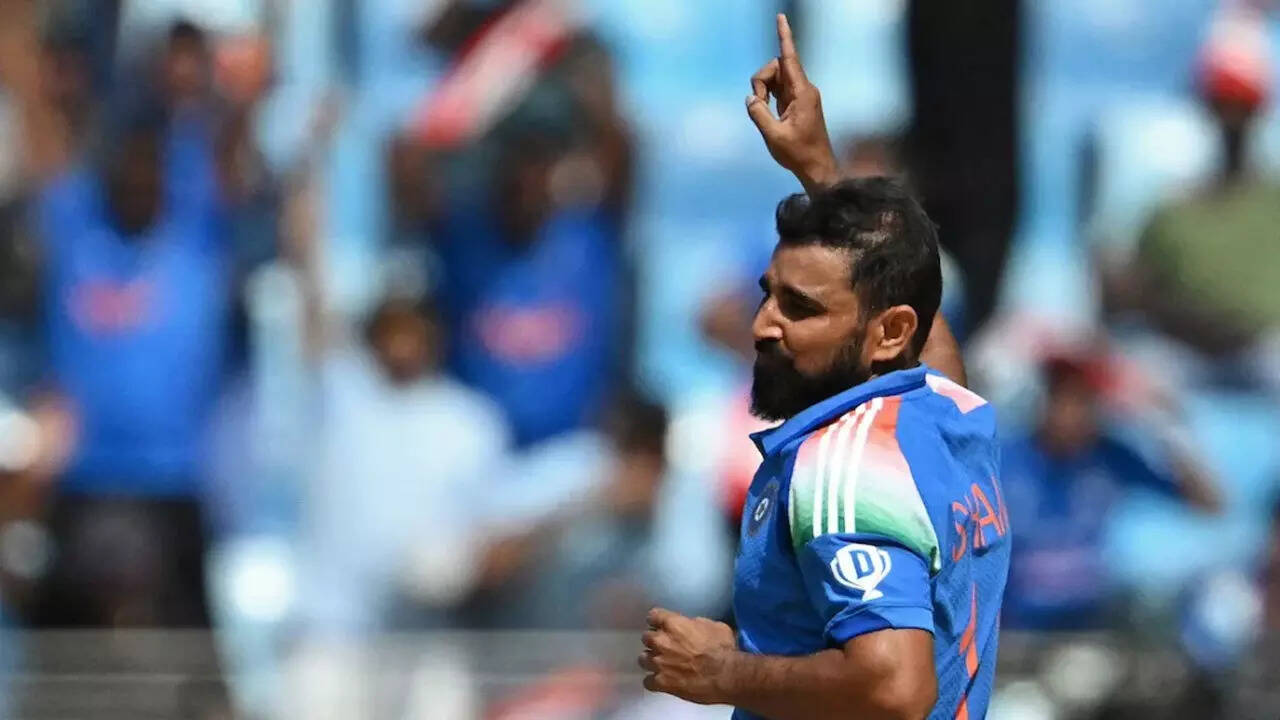
 The recent announcement of Mohammed Shami being left out of India's squad for the upcoming ODI series against New Zealand has sparked controversy and raised questions about the selection process. Ajit Agarkar, former Indian cricketer, has openly criticized this decision, emphasizing that 'Doors should not be closed' for players like Shami. Shami, a seasoned fast bowler at 35, has been an integral part of the Indian team, notably contributing to their Champions Trophy victory in 2025. However, his absence from the recent squad selection has cast doubts on his international future. This snub comes as a significant setback for Shami, who has been out of the national team for a considerable period. The debate around his exclusion highlights the complexities and challenges faced by players in the competitive world of cricket. Questions arise about the criteria used for selection, the need for consistent performance, and the importance of providing opportunities for experienced players like Shami. As discussions and speculations unfold, it is crucial to consider the impact of such decisions on players' morale and motivations. While selection processes are inherently subjective, the emphasis should be on transparency, fairness, and open communication with the players. Closed doors in selection processes can lead to disillusionment among talented individuals and hinder the overall growth of the sport. The debate triggered by Shami's omission underscores the need for a balanced approach to team selection, recognizing players' past contributions, current form, and future potential. Every player deserves a fair chance to prove themselves on the field, and closing doors prematurely can deprive cricket of talent and diversity. As the cricketing world reflects on this latest controversy, it serves as a reminder of the constant evolution and scrutiny faced by players in the high-stakes arena of international cricket.
The recent announcement of Mohammed Shami being left out of India's squad for the upcoming ODI series against New Zealand has sparked controversy and raised questions about the selection process. Ajit Agarkar, former Indian cricketer, has openly criticized this decision, emphasizing that 'Doors should not be closed' for players like Shami. Shami, a seasoned fast bowler at 35, has been an integral part of the Indian team, notably contributing to their Champions Trophy victory in 2025. However, his absence from the recent squad selection has cast doubts on his international future. This snub comes as a significant setback for Shami, who has been out of the national team for a considerable period. The debate around his exclusion highlights the complexities and challenges faced by players in the competitive world of cricket. Questions arise about the criteria used for selection, the need for consistent performance, and the importance of providing opportunities for experienced players like Shami. As discussions and speculations unfold, it is crucial to consider the impact of such decisions on players' morale and motivations. While selection processes are inherently subjective, the emphasis should be on transparency, fairness, and open communication with the players. Closed doors in selection processes can lead to disillusionment among talented individuals and hinder the overall growth of the sport. The debate triggered by Shami's omission underscores the need for a balanced approach to team selection, recognizing players' past contributions, current form, and future potential. Every player deserves a fair chance to prove themselves on the field, and closing doors prematurely can deprive cricket of talent and diversity. As the cricketing world reflects on this latest controversy, it serves as a reminder of the constant evolution and scrutiny faced by players in the high-stakes arena of international cricket.
The recent announcement of Mohammed Shami being left out of India's squad for the upcoming ODI series against New Zealand has sparked controversy and raised questions about the selection process. Ajit Agarkar, former Indian cricketer, has openly criticized this decision, emphasizing that 'Doors should not be closed' for players like Shami. Shami, a seasoned fast bowler at 35, has been an integral part of the Indian team, notably contributing to their Champions Trophy victory in 2025. However, his absence from the recent squad selection has cast doubts on his international future. This snub comes as a significant setback for Shami, who has been out of the national team for a considerable period. The debate around his exclusion highlights the complexities and challenges faced by players in the competitive world of cricket. Questions arise about the criteria used for selection, the need for consistent performance, and the importance of providing opportunities for experienced players like Shami. As discussions and speculations unfold, it is crucial to consider the impact of such decisions on players' morale and motivations. While selection processes are inherently subjective, the emphasis should be on transparency, fairness, and open communication with the players. Closed doors in selection processes can lead to disillusionment among talented individuals and hinder the overall growth of the sport. The debate triggered by Shami's omission underscores the need for a balanced approach to team selection, recognizing players' past contributions, current form, and future potential. Every player deserves a fair chance to prove themselves on the field, and closing doors prematurely can deprive cricket of talent and diversity. As the cricketing world reflects on this latest controversy, it serves as a reminder of the constant evolution and scrutiny faced by players in the high-stakes arena of international cricket.