
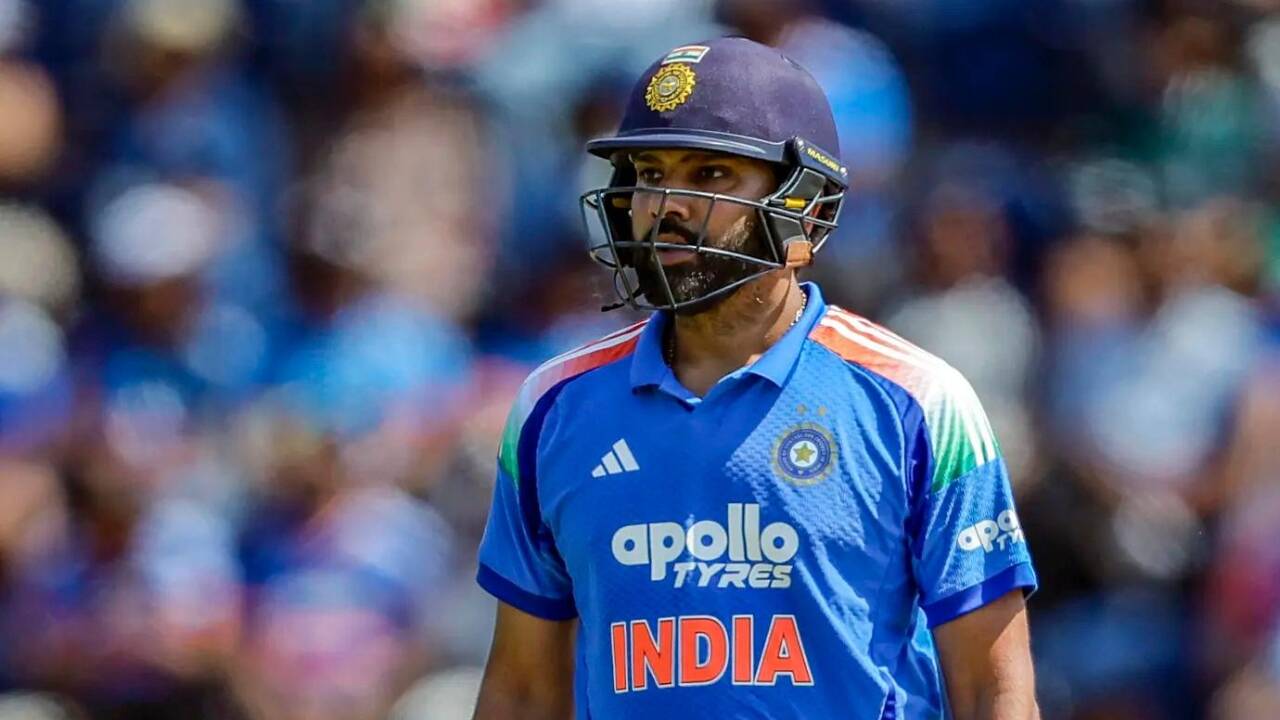
Rohit Sharma’s form has once again become a talking point after India’s four-wicket defeat to England in the second ODI in Cardiff, a result that allowed the hosts to level the three-match series 1-1.
The Indian captain managed only 26 runs off 47 balls, and while the score itself was not disastrous, the manner of the innings raised questions. Rohit never looked fluent. By the end of the Powerplay, he had crawled to 10 off 18 balls, even as India had moved briskly to 61/1. The contrast was hard to miss.
The Coach’s Verdict: Perspective Over Panic
India’s coaching staff appeared unwilling to overreact to Rohit’s recent failures. The verdict was simple in tone: he has not scored in two games, but that alone does not define his form or value.
That assessment is understandable. Rohit is not a young batter fighting for identity; he is one of India’s most accomplished ODI openers, a player whose method has shaped India’s white-ball batting template for years. Two quiet innings are not enough to dismiss that body of work.
However, elite cricket is rarely judged only by numbers. It is also judged by rhythm, control, and presence at the crease — and in Cardiff, Rohit looked short of all three.
What Went Wrong in Cardiff?
Rohit’s innings lacked the usual signs of authority. He was watchful early on, but the problem was not caution; it was the absence of fluency. His timing was inconsistent, his strike rotation was limited, and he struggled to impose himself despite India scoring well at the other end.
The dismissal summed up the innings. Attempting a sweep against Will Jacks, Rohit fell at a stage where India needed him to convert a start into a platform. It was not an irresponsible shot in isolation, but given how unsettled he had looked, it felt like a batter searching for release rather than dictating terms.
Why Rohit’s Form Matters More Than Most
Rohit’s role in this Indian ODI side is bigger than just runs. When he starts well, India’s batting order breathes easier. His ability to dominate the new ball allows the middle order to enter with momentum rather than repair work.
In recent years, Rohit has also redefined his ODI approach by showing greater intent in the Powerplay. That aggression has often given India fast starts, even when he has not gone on to make a century. But in Cardiff, that intent was missing. More importantly, so was the timing that usually makes his attacking game look effortless.
Is This a Technical Issue?
At this stage, it looks less like a major technical flaw and more like a rhythm issue. Rohit’s feet did not move with conviction, and he appeared caught between survival and stroke-making. Against quality bowling attacks, that half-space can be dangerous.
England also deserve credit. They did not offer him easy scoring options and used spin smartly to disrupt his tempo. Will Jacks’ wicket was a reward for pressure built over time.
Should India Be Worried?
Concerned? Yes. Panicked? No.
Rohit has earned the right to be backed through short lean patches. But with major assignments always around the corner for India, the team management will want him to rediscover rhythm quickly. The issue is not just whether Rohit scores runs, but whether he can once again provide India with the kind of commanding starts that shape matches.
The final ODI now becomes important not only for the series result but also for Rohit personally. A fluent 40 or 50 may do more for confidence than a scratchy big score. What India need from him is clarity — the clarity to defend with purpose, attack with authority, and lead from the front.
Final Word
The coach’s calm stance is the right one. Rohit Sharma’s career cannot be judged by two low scores. But form in international cricket can shift quickly, and India will know that their captain’s rhythm at the top is central to their ODI balance.
Cardiff was not a crisis, but it was a warning sign. For Rohit, the challenge is clear: turn starts into substance, and uncertainty back into command.