
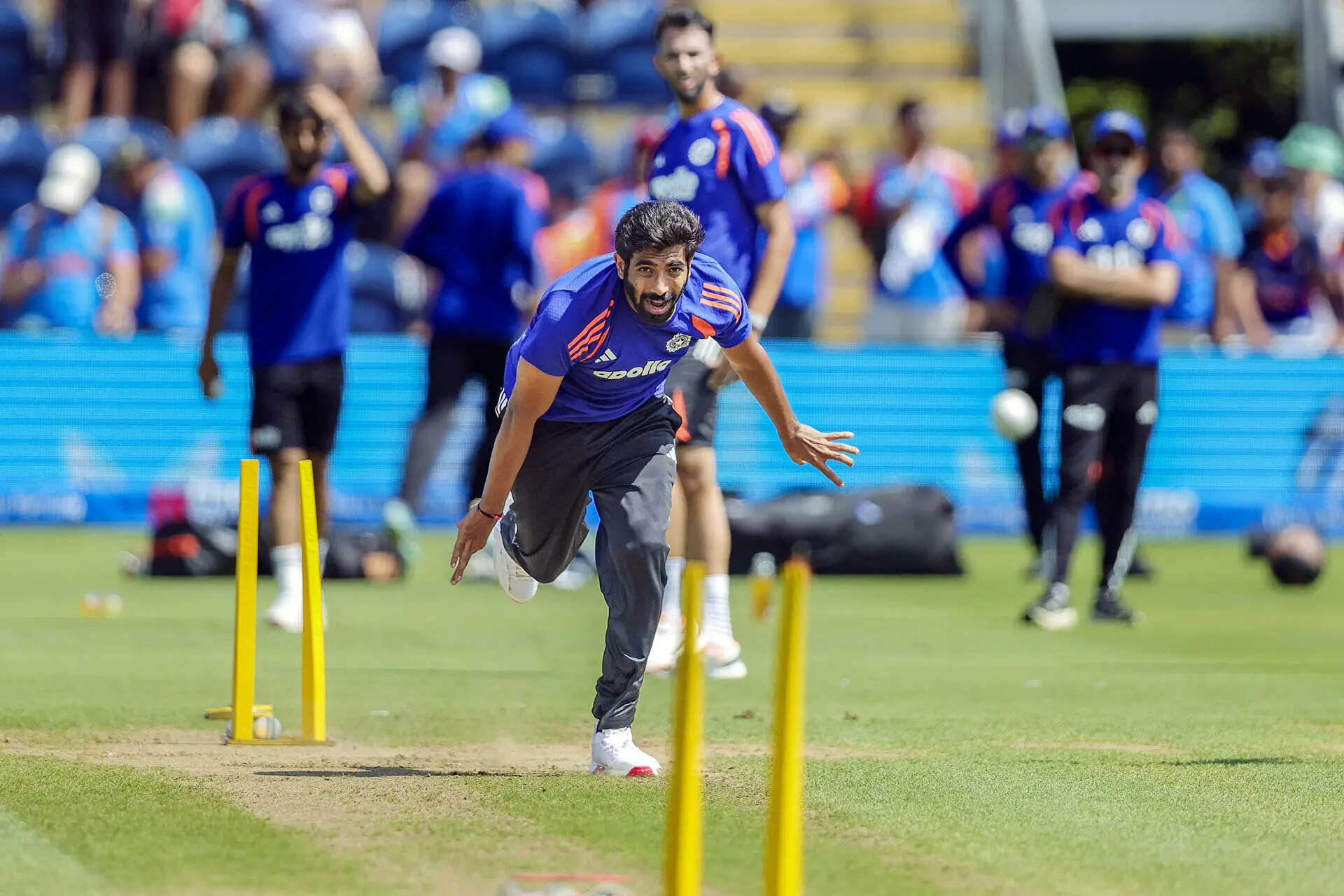
India’s third ODI against England at Lord’s was not merely a defeat; it was a warning sign. England’s imposing 387/3 exposed familiar concerns in India’s white-ball bowling structure, especially in the absence of Jasprit Bumrah. On a day when Jacob Bethell and Ben Duckett set the tone with a massive opening stand, India looked short of answers, short of control, and most worryingly, short of a clear middle-over plan.
England’s Openers Expose India’s Lack of Early Control
England’s innings was built on aggression, clarity, and ruthless execution. Jacob Bethell and Ben Duckett attacked India’s new-ball bowlers with authority, taking advantage of loose lines and inconsistent lengths. What made their partnership so damaging was not just the volume of runs, but the ease with which they scored them.
India failed to create sustained pressure in the powerplay. Without Bumrah’s precision, awkward angles, and wicket-taking threat, the attack appeared one-dimensional. England’s openers were rarely forced into risk. Instead, they were allowed to settle, rotate, and then accelerate.
The Bumrah Factor: More Than Just Wickets
India’s dependence on Bumrah is often discussed in terms of his wicket-taking ability, but his real value goes deeper. He controls phases. He forces batters to rethink scoring options. He allows captains to attack from the other end. His absence changes the entire rhythm of India’s bowling innings.
At Lord’s, that absence was glaring. India lacked a bowler who could stop momentum when England were cruising. There was no consistent yorker threat, no uncomfortable short-ball burst, no spell that forced Duckett and Bethell into a defensive mindset.
This is a dangerous pattern for India. If the bowling unit looks significantly weaker every time Bumrah is unavailable, then the problem is not just about one missing player. It is about depth, planning, and adaptability.
Discipline Issues Make Matters Worse
India’s bowlers also hurt themselves with poor discipline. Too many extras, too many boundary balls, and too many predictable deliveries gave England easy scoring opportunities. In high-scoring modern ODI cricket, teams can survive aggressive batting, but they cannot afford to gift runs through wides, no-balls, and poor field execution.
England did not need a second invitation. Once the Indian bowlers lost their radar, the hosts kept increasing the tempo. The pressure shifted almost entirely onto India, and the bowlers seemed to chase the game rather than control it.
Middle-Overs Planning Looks Confused
The most worrying aspect of India’s performance was the lack of structure between overs 11 and 40. This is the phase where modern ODI games are often won. Teams that take wickets in the middle overs usually control totals. Teams that simply wait for mistakes often get punished.
India’s approach looked reactive. Field placements did not always match bowling plans. Bowling changes appeared defensive rather than tactical. There was little evidence of a coordinated plan to target specific batters with specific match-ups.
England’s batters were allowed to rotate strike comfortably, which prevented any pressure from building. When boundaries came, they were not isolated moments; they were part of a broader pattern of Indian bowlers failing to dictate terms.
Spin and Pace Combination Needs Reassessment
India’s middle-over identity has traditionally relied on spin control and pace variation. But at Lord’s, neither department was able to impose itself. The spinners struggled to dry up runs, while the pacers failed to produce breakthrough spells when brought back into the attack.
This raises an important question for India’s ODI roadmap: are they selecting bowlers for reputation, role clarity, or conditions? For the 2027 ODI World Cup cycle, India cannot afford uncertainty in their bowling combinations. They need defined roles: new-ball enforcers, middle-over wicket-takers, defensive operators, and death-over specialists.
England Show the Template India Must Study
England’s batting performance was not reckless hitting. It was calculated domination. Their openers understood when to attack, when to rotate, and which bowlers to target. India, in contrast, seemed unable to disrupt those plans.
The difference was clarity. England knew their tempo. India searched for answers. That gap in planning is exactly what India must address before bigger tournaments arrive.
2027 World Cup Concerns Are Real
With the next ODI World Cup scheduled for 2027, India still have time to rebuild and refine their bowling structure. But performances like this cannot be dismissed as one bad day. They point to deeper issues: over-reliance on Bumrah, lack of middle-over wicket-taking options, inconsistent discipline, and unclear tactical planning.
India’s batting depth often dominates selection debates, but bowling wins World Cups. The 2023 campaign showed how powerful India can be when their attack is firing collectively. The challenge now is to ensure that the system does not collapse when one superstar is missing.
Final Thoughts
England’s record total at Lord’s should force India into honest reflection. Bumrah’s absence was significant, but it cannot become an excuse. A world-class ODI side must have backup plans, phase-specific strategies, and bowlers capable of adapting under pressure.
If India want to build a serious challenge for the 2027 ODI World Cup, they must fix their middle-over planning and develop a bowling unit that has bite beyond Bumrah. Otherwise, powerful batting sides like England will continue to expose the cracks.